亚洲精品国偷自产在线-无码精品人妻一区二区三区中-青草久久人人97超碰-亚洲精品一区久久久久-午夜性开放午夜性爽爽

/ Home
/ About CTG
/ Green Life
/ Business
/ News & Media
/ Sustainability
Chinese
English

Nation playing key role in world hydropower market

From: China Daily

Date: 2025-08-22
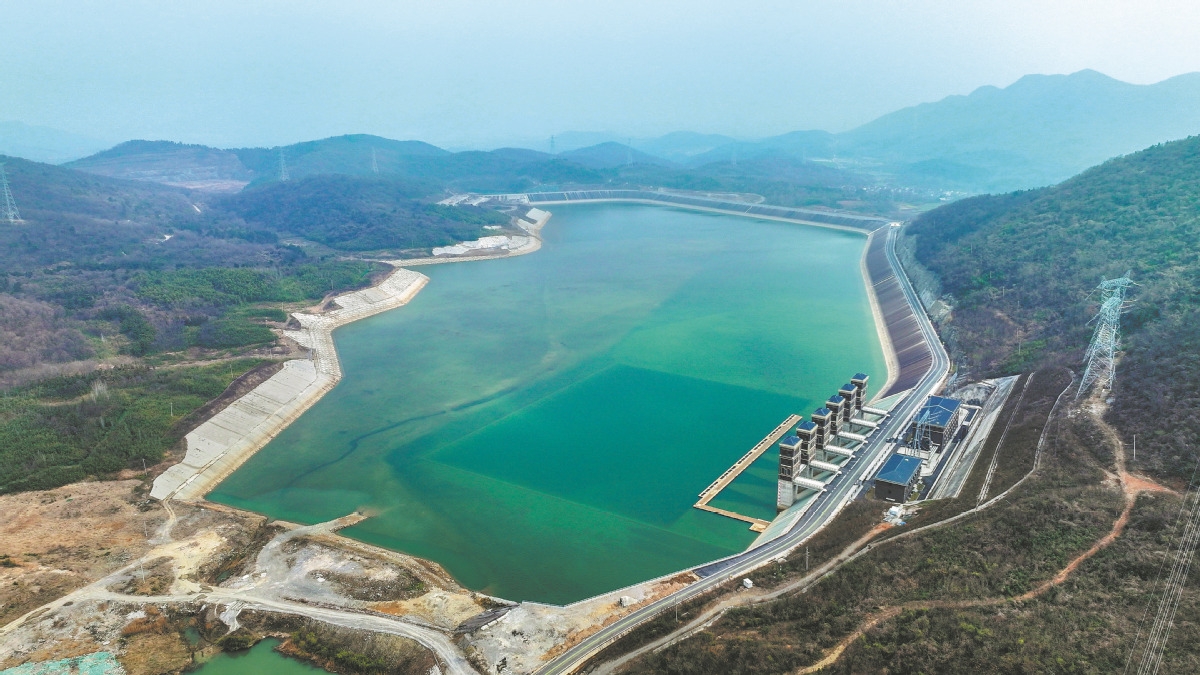
?The No 3 unit of the Jurong Pumped-Storage Power Plant in Jurong, Jiangsu province, which was connected to the grid for power generation on March 10. SHI JUN/FOR CHINA DAILY

China is expected to remain the world's largest hydropower market through 2030, fueled by significant domestic investment and the expansion of Chinese firms into developing nations, industry experts and executives said.

The world's second-largest economy has been leading the world in installed hydropower capacity, accounting for over half of all new global hydropower capacity additions last year, the International Hydropower Association said in a report released recently.

IHA said global hydropower capacity grew by 24.6 gigawatts last year, with China contributing 14.4 GW, or nearly 60 percent of the total, cementing its position as a global leader in hydropower development.

Pumped hydro storage accounted for more than half of China's hydropower capacity growth, with new capacity reaching 7.75 GW, it added.

China has over 91 GW of pumped hydro projects under construction and is expected to surpass its original target of 120 GW by 2030, according to the IHA. With an additional 136 GW of pumped hydro storage capacity planned, China is poised to accelerate its development in this sector, the association said.

As Chinese hydropower companies significantly expand their presence in emerging and developing nations, particularly through the Belt and Road Initiative, the country is expected to play a bigger role in the global hydropower market, analysts said.

Driven by the growing domestic hydropower sector and higher demand for energy in these developing countries, Chinese firms are increasingly involved in building, financing, and owning a large percentage of new hydropower projects in regions like Africa, Southeast Asia and Latin America, said Lin Boqiang, head of the China Institute for Studies in Energy Policy at Xiamen University.

The Belt and Road Initiative provides a framework for Chinese investment and development projects, including hydropower, in many emerging and developing countries, he said.

"As many developing nations are seeking reliable and affordable energy sources, hydropower is seen as a potential solution. On the other hand, Chinese State-owned banks and other financial institutions play a crucial role in financing these projects."

China Three Gorges Corporation, for example, has been consistently focusing on overseas hydropower projects, particularly in South Asia, Southeast Asia, Africa and Latin America.

CTG's overseas arm, CTG International, has expanded its operations across five continents, boasting over 19 million kilowatts of installed capacity.

Karot Hydropower Station, for example, a priority project for energy cooperation under the China-Pakistan Economic Corridor and operated by CTG, now boasts a total installed capacity of 720 megawatts and generates an annual average of 3,200 gigawatt-hours of clean electricity, meeting the power needs of over 5 million people.

While expanding its global footprint, China is also heavily investing in domestic hydropower, particularly pumped hydro storage, to support its energy transition.

China announced recently the construction of a hydropower project in the lower reaches of the Yarlung Zangbo River, which will consist of five cascade hydropower stations with a total investment estimated at around 1.2 trillion yuan ($167.8 billion).

By harnessing the abundant hydropower resources of the river, the project will also spur the development of solar and wind energy resources in surrounding areas, creating a clean energy base featuring a complementary mix of hydro, wind and solar power.

The hydropower project will primarily deliver electricity for external consumption while also addressing local demand in the Xizang autonomous region.

China also boasts the world's largest clean energy corridor, which comprises six mega hydropower stations on the Yangtze River, the longest river in China, with a total installed capacity of 71.7 million kW.

Comprising 110 generating units, it transmits electricity from the resource-rich west to energy-consuming regions in the eastern parts of China.

The corridor achieved a record-breaking annual power generation of 295.9 billion kilowatt-hours last year, representing a year-on-year increase of 7.11 percent, equivalent to saving approximately 89.24 million metric tons of standard coal and reducing carbon dioxide emissions by over 240 million tons, according to China Yangtze Power Co Ltd, a subsidiary of CTG.

A research report by Guosheng Securities pointed out that Xizang has approximately 200 million kW of hydropower resources, accounting for nearly 30 percent of the country's total, ranking first in the country.

Analysts believe that China's continued investment in pumped hydro storage stations is becoming a crucial means of maintaining grid stability during its energy transition.
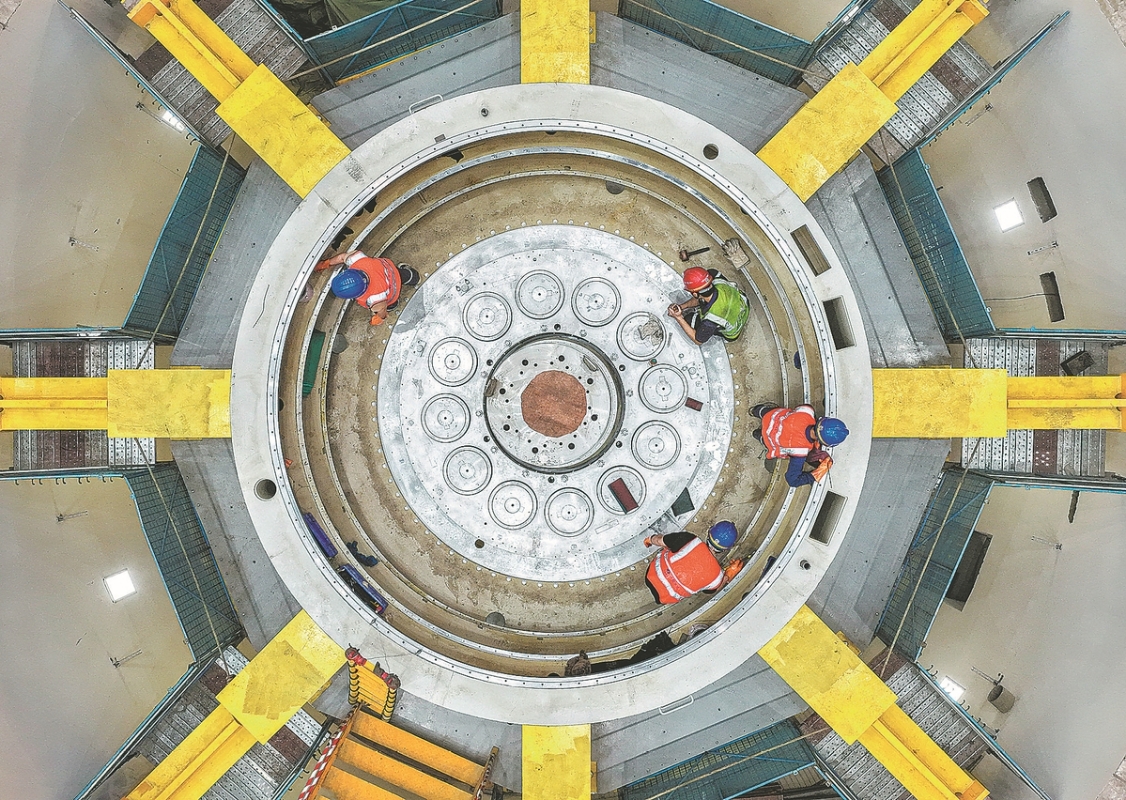
?Staff members install bearings at the construction site of a pumped storage power station in Taizhou, Zhejiang province, on Aug 18.?SUN JINBIAO/FOR CHINA DAILY

Pumped hydro storage projects use electricity during periods of low demand to pump water to an upper reservoir, which is then released to generate electricity during peak demand periods, earning them the nickname "super charging stations".

Zhang Zongliang, an academician at the Chinese Academy of Engineering, expects significant market growth in the sector, driven by the increasing integration of wind and solar power into the energy system.

Pumped hydro storage is a vital component of clean energy hubs, facilitating the ongoing expansion of renewable energy sources, he said.

According to the China Renewable Energy Engineering Institute, 23 new pumped hydro storage projects were approved last year in China, which further solidified the country's position as the world leader in pumped hydro storage for the ninth consecutive year.

The IHA said China is set to exceed its 2030 pumped storage hydropower target by more than 8 percent and potentially reach 130 GW by the end of the decade.

China's total installed hydropower capacity has reached approximately 436 GW, accounting for more than three-quarters of Asia's total capacity, it said.

In addition to hydropower, China continues to maintain its global leadership in renewable energy sources such as wind and solar power. By the end of 2024, China's total installed wind and solar power capacity had exceeded 1,200 GW, achieving its national target for wind and solar power capacity originally set for 2030 ahead of schedule.

The government's policy of raising electricity prices during peak demand times has incentivized storage providers, including pumped hydro operators, said Lin.

This allows them to profit from selling stored power at higher prices, further boosting the development of the sector, he said.

China has consistently increased its investment in hydropower development in recent years.

State Grid Corp of China's new energy subsidiary completed a 36.5 billion yuan capital increase and share expansion project in late July.

The substantial capital injection will be entirely allocated to the construction of pumped-hydro energy storage projects, an initiative seen as crucial for promoting high-quality development in the pumped-hydro sector, accelerating the establishment of a new type of power system, and contributing to the stable growth of the national economy, said Zhang Zhigang, executive chairman of the company.

The company currently has 75 pumped hydro power stations in operation or under construction, with a total capacity of 94 million kW, making it the world's largest operator of pumped hydro facilities.

According to the China Renewable Energy Engineering Institute, since the commissioning of China's first pumped hydro station in 1968 — almost 90 years after the world's first such facility was established in Zurich, Switzerland — the nation's expertise in this technology has matured through decades of practical application and technological accumulation.

China has also come up with a comprehensive industrial system and specialized development model, covering standard formulation, planning and design, engineering construction and equipment, it said.

All Copyrigh

By China Three Gorges Corporation

Reprinting or mirroring is strictly prohibited without written authorization,

and offenders will be held liable.

Nation playing key role in world hydropower market

From: China Daily

Date: 2025-08-22

?The No 3 unit of the Jurong Pumped-Storage Power Plant in Jurong, Jiangsu province, which was connected to the grid for power generation on March 10. SHI JUN/FOR CHINA DAILY

China is expected to remain the world's largest hydropower market through 2030, fueled by significant domestic investment and the expansion of Chinese firms into developing nations, industry experts and executives said.

The world's second-largest economy has been leading the world in installed hydropower capacity, accounting for over half of all new global hydropower capacity additions last year, the International Hydropower Association said in a report released recently.

IHA said global hydropower capacity grew by 24.6 gigawatts last year, with China contributing 14.4 GW, or nearly 60 percent of the total, cementing its position as a global leader in hydropower development.

Pumped hydro storage accounted for more than half of China's hydropower capacity growth, with new capacity reaching 7.75 GW, it added.

China has over 91 GW of pumped hydro projects under construction and is expected to surpass its original target of 120 GW by 2030, according to the IHA. With an additional 136 GW of pumped hydro storage capacity planned, China is poised to accelerate its development in this sector, the association said.

As Chinese hydropower companies significantly expand their presence in emerging and developing nations, particularly through the Belt and Road Initiative, the country is expected to play a bigger role in the global hydropower market, analysts said.

Driven by the growing domestic hydropower sector and higher demand for energy in these developing countries, Chinese firms are increasingly involved in building, financing, and owning a large percentage of new hydropower projects in regions like Africa, Southeast Asia and Latin America, said Lin Boqiang, head of the China Institute for Studies in Energy Policy at Xiamen University.

The Belt and Road Initiative provides a framework for Chinese investment and development projects, including hydropower, in many emerging and developing countries, he said.

"As many developing nations are seeking reliable and affordable energy sources, hydropower is seen as a potential solution. On the other hand, Chinese State-owned banks and other financial institutions play a crucial role in financing these projects."

China Three Gorges Corporation, for example, has been consistently focusing on overseas hydropower projects, particularly in South Asia, Southeast Asia, Africa and Latin America.

CTG's overseas arm, CTG International, has expanded its operations across five continents, boasting over 19 million kilowatts of installed capacity.

Karot Hydropower Station, for example, a priority project for energy cooperation under the China-Pakistan Economic Corridor and operated by CTG, now boasts a total installed capacity of 720 megawatts and generates an annual average of 3,200 gigawatt-hours of clean electricity, meeting the power needs of over 5 million people.

While expanding its global footprint, China is also heavily investing in domestic hydropower, particularly pumped hydro storage, to support its energy transition.

China announced recently the construction of a hydropower project in the lower reaches of the Yarlung Zangbo River, which will consist of five cascade hydropower stations with a total investment estimated at around 1.2 trillion yuan ($167.8 billion).

By harnessing the abundant hydropower resources of the river, the project will also spur the development of solar and wind energy resources in surrounding areas, creating a clean energy base featuring a complementary mix of hydro, wind and solar power.

The hydropower project will primarily deliver electricity for external consumption while also addressing local demand in the Xizang autonomous region.

China also boasts the world's largest clean energy corridor, which comprises six mega hydropower stations on the Yangtze River, the longest river in China, with a total installed capacity of 71.7 million kW.

Comprising 110 generating units, it transmits electricity from the resource-rich west to energy-consuming regions in the eastern parts of China.

The corridor achieved a record-breaking annual power generation of 295.9 billion kilowatt-hours last year, representing a year-on-year increase of 7.11 percent, equivalent to saving approximately 89.24 million metric tons of standard coal and reducing carbon dioxide emissions by over 240 million tons, according to China Yangtze Power Co Ltd, a subsidiary of CTG.

A research report by Guosheng Securities pointed out that Xizang has approximately 200 million kW of hydropower resources, accounting for nearly 30 percent of the country's total, ranking first in the country.

Analysts believe that China's continued investment in pumped hydro storage stations is becoming a crucial means of maintaining grid stability during its energy transition.

?Staff members install bearings at the construction site of a pumped storage power station in Taizhou, Zhejiang province, on Aug 18.?SUN JINBIAO/FOR CHINA DAILY

Pumped hydro storage projects use electricity during periods of low demand to pump water to an upper reservoir, which is then released to generate electricity during peak demand periods, earning them the nickname "super charging stations".

Zhang Zongliang, an academician at the Chinese Academy of Engineering, expects significant market growth in the sector, driven by the increasing integration of wind and solar power into the energy system.

Pumped hydro storage is a vital component of clean energy hubs, facilitating the ongoing expansion of renewable energy sources, he said.

According to the China Renewable Energy Engineering Institute, 23 new pumped hydro storage projects were approved last year in China, which further solidified the country's position as the world leader in pumped hydro storage for the ninth consecutive year.

The IHA said China is set to exceed its 2030 pumped storage hydropower target by more than 8 percent and potentially reach 130 GW by the end of the decade.

China's total installed hydropower capacity has reached approximately 436 GW, accounting for more than three-quarters of Asia's total capacity, it said.

In addition to hydropower, China continues to maintain its global leadership in renewable energy sources such as wind and solar power. By the end of 2024, China's total installed wind and solar power capacity had exceeded 1,200 GW, achieving its national target for wind and solar power capacity originally set for 2030 ahead of schedule.

The government's policy of raising electricity prices during peak demand times has incentivized storage providers, including pumped hydro operators, said Lin.

This allows them to profit from selling stored power at higher prices, further boosting the development of the sector, he said.

China has consistently increased its investment in hydropower development in recent years.

State Grid Corp of China's new energy subsidiary completed a 36.5 billion yuan capital increase and share expansion project in late July.

The substantial capital injection will be entirely allocated to the construction of pumped-hydro energy storage projects, an initiative seen as crucial for promoting high-quality development in the pumped-hydro sector, accelerating the establishment of a new type of power system, and contributing to the stable growth of the national economy, said Zhang Zhigang, executive chairman of the company.

The company currently has 75 pumped hydro power stations in operation or under construction, with a total capacity of 94 million kW, making it the world's largest operator of pumped hydro facilities.

According to the China Renewable Energy Engineering Institute, since the commissioning of China's first pumped hydro station in 1968 — almost 90 years after the world's first such facility was established in Zurich, Switzerland — the nation's expertise in this technology has matured through decades of practical application and technological accumulation.

China has also come up with a comprehensive industrial system and specialized development model, covering standard formulation, planning and design, engineering construction and equipment, it said.

All Copyrigh

By China Three Gorges Corporation

Reprinting or mirroring is strictly prohibited without written authorization,

and offenders will be held liable.

Contact Us
Address :No. 1 Liuhe Road, Jiang'an District, Wuhan City, Hubei Province, China

Site Map

Link

Copyright 2022-2026 - China Three Gorges Corporation. All rights reserved.
Copyright 2022-2026 - China Three Gorges Corporation.
主站蜘蛛池模板: 国产午夜精品一区二区三区| aaa少妇高潮大片免费看| 精品国产成人国产在线观看| 亚洲а∨天堂久久精品9966 | 国产亚洲欧洲aⅴ综合一区| 98色婷婷在线| 亚洲高清成人aⅴ片777| 10000部拍拍拍免费视频| 狼群社区视频www国语| 波多野结衣av一区二区三区中文| 成人毛片18女人毛片免费| 高清同性男毛片| 少女韩国电视剧在线观看完整 | 国产精品久久久影视青草| 国产精品无码久久四虎| 成年免费视频黄网站在线观看| 亚洲麻豆av成本人无码网站 | 色欲av巨乳无码一区二区| 亚洲男人的天堂在线va| 午夜成人理论无码电影在线播放| 99精品久久精品一区二区| 亚洲成av人片无码天堂下载| 亚洲国产av一区二区三区丶| 国产日韩精品一区二区三区在线 | 国产福利萌白酱精品一区| 国产莉萝无码av在线播放| 秋霞鲁丝片一区二区三区| 亚洲精品国产精品乱码不卞| 亚洲精品成人网站在线观看| 国产真人作爱免费视频道歉| 男女性杂交内射妇女bbwxz| 综合偷自拍亚洲乱中文字幕| 亚洲乱妇老熟女爽到高潮的片| 久久久国产精品| 中文字幕乱码熟女人妻水蜜桃| 992tv精品视频tv在线观看| 久久久久成人精品无码| 人妻av无码系列一区二区三区 | 人妻av无码系列专区移动可看| 久章草在线精品视频免费观看| 婷婷伊人久久大香线蕉av|